Research
Survey golfers, observe play, and analyze existing products.
A mobile and wearable experience that helps golfers choose the right club, understand their performance, and receive useful guidance without interrupting play.
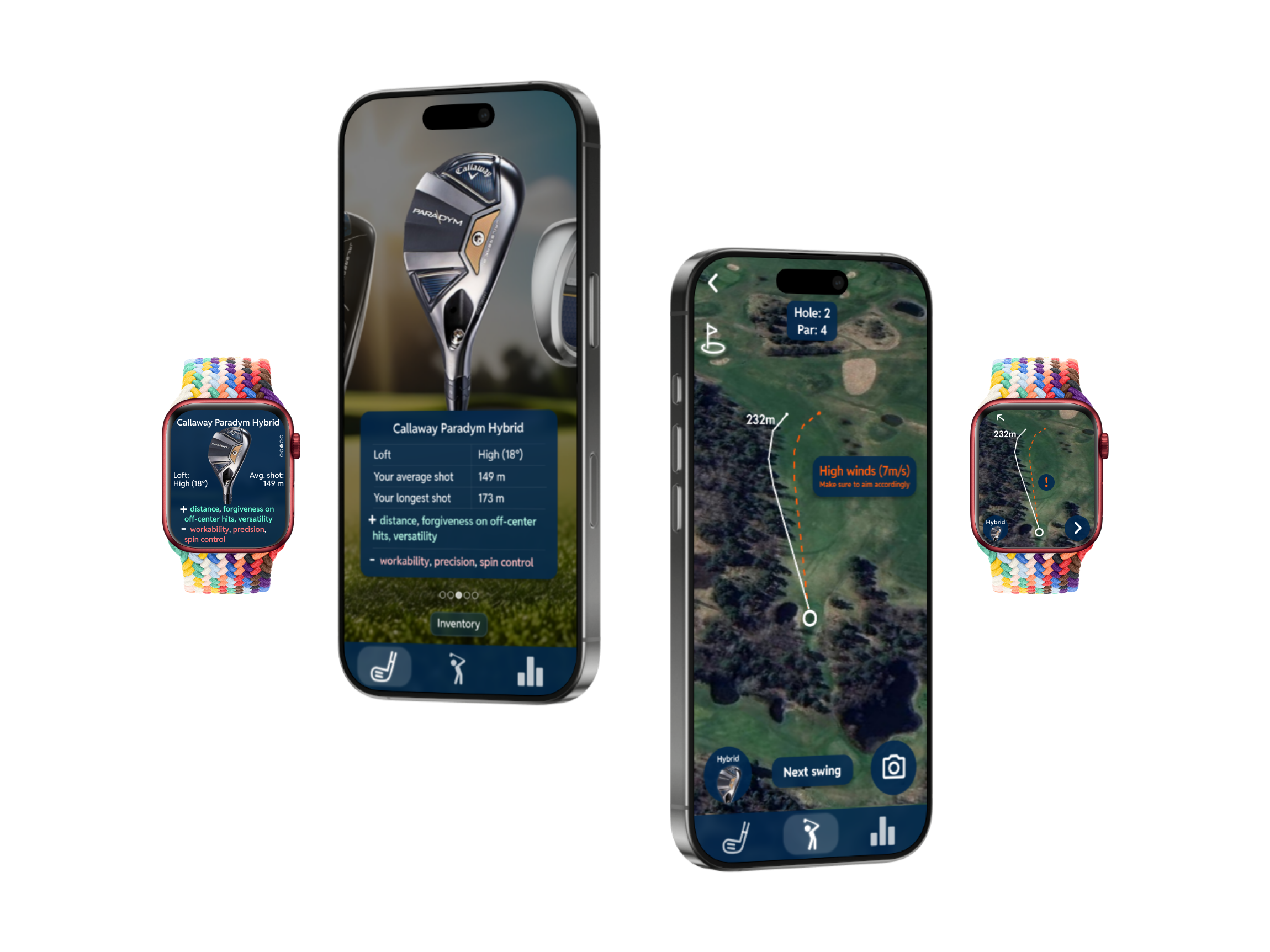
The project moved from understanding decisions on the course to testing phone concepts and adapting the experience for a wearable.
Survey golfers, observe play, and analyze existing products.
Use How Might We, Round Robin, and bodystorming.
Test club guidance, performance, and shot visualization.
Reduce distraction through smartwatch support.
Golfers make frequent decisions about clubs, distance, weather, and personal ability. GolfGo explores how real-time assistance can increase confidence while respecting the pace, movement, and focus of play.
User interviews, surveys, and field visits helped us understand how golfers make decisions, track performance, and use digital tools. We also reviewed competing golf products to identify gaps.
The strongest opportunity was personalized guidance with real-time feedback during play.
Advice must be quick to read and easy to act on between shots.
How Might We questions reframed each challenge as a design opportunity. Round Robin brainstorming helped the team build on one another's ideas and unify the strongest concepts.
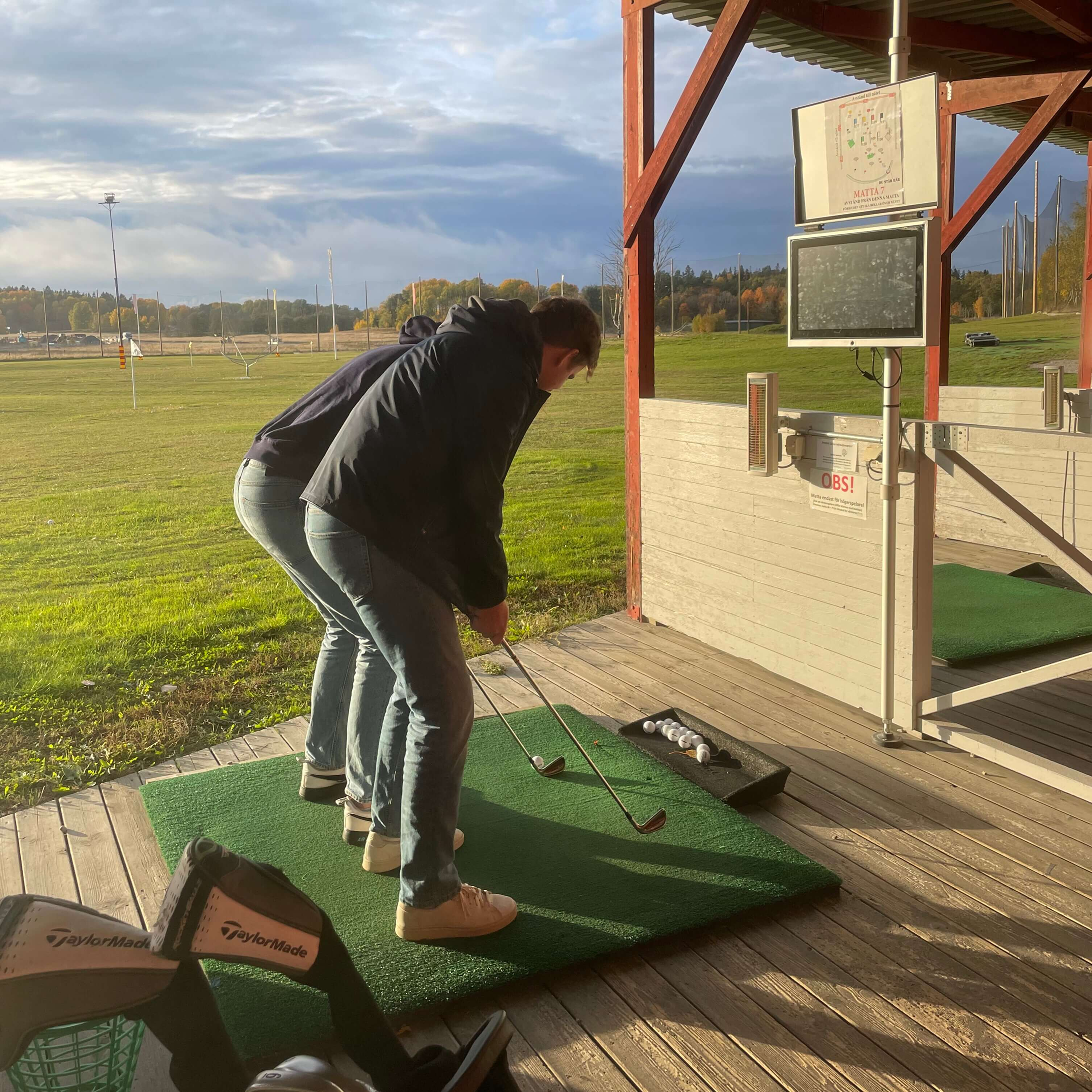
Bodystorming on the course tested how features such as club selection and shot prediction might fit naturally into a round.
Reframe frustrations as actionable design questions.
Build collaboratively on ideas instead of working in silos.
Act out interactions in the environment where they happen.
Interactive prototypes explored club recommendations, performance tracking, and shot visualization. Think-aloud sessions and A/B comparisons revealed that clarity and speed mattered more than detailed controls during play.
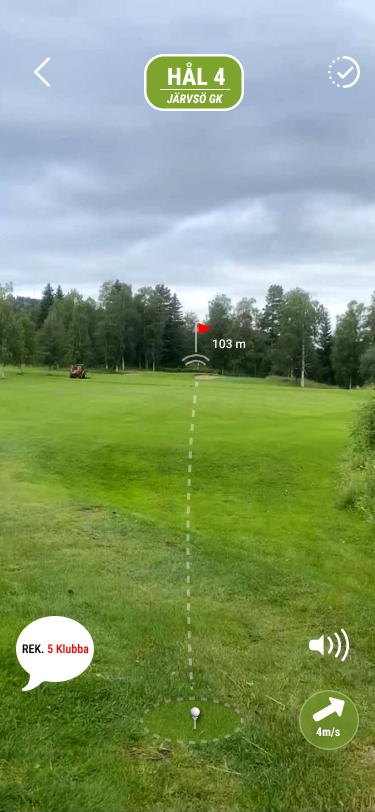
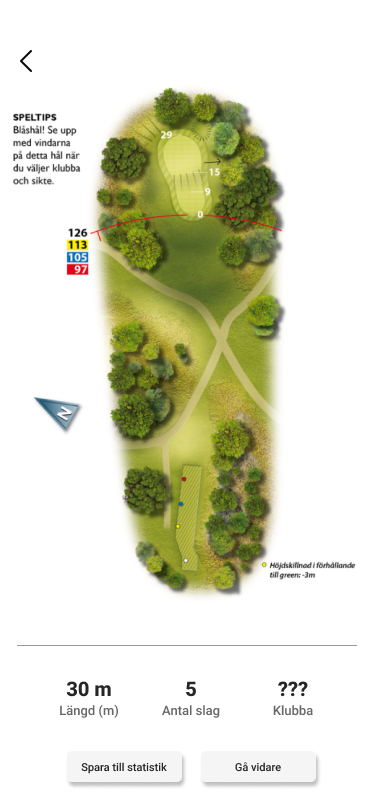
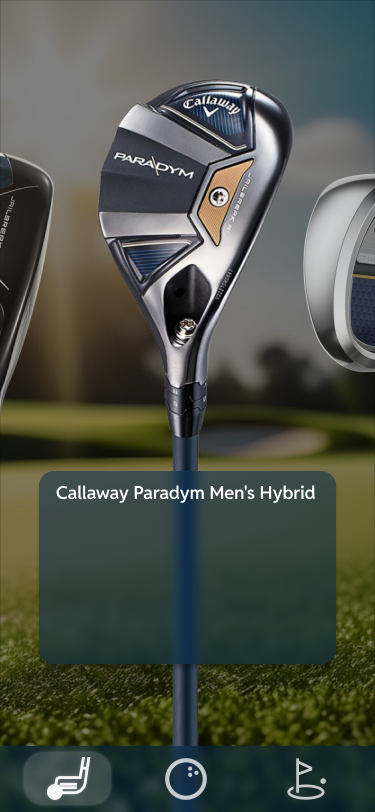
Testing showed that many golfers did not want to handle a phone mid-game because it introduced distraction and accessibility friction. The experience expanded to a smartwatch, providing club suggestions and shot history through minimal interaction.
The final concept combines smartphone depth with smartwatch immediacy. Golfers can learn about clubs, compare strengths and weaknesses, predict shots, and access essential guidance in the format best suited to the moment.
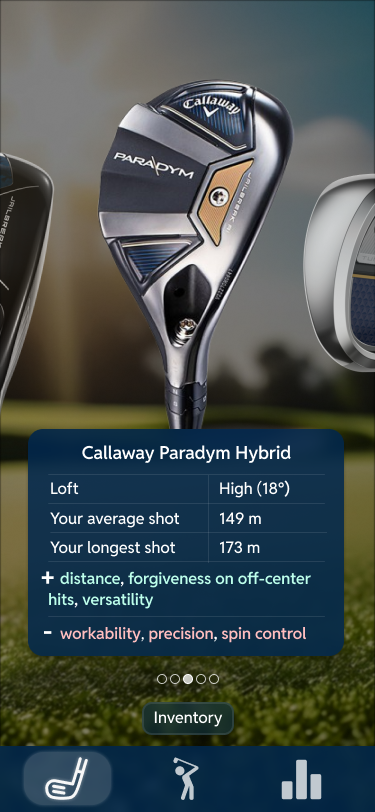
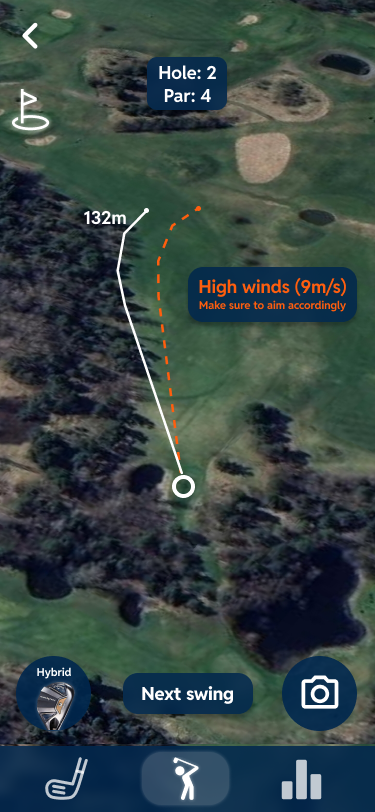
Field research and bodystorming uncovered needs that desk research could not. The shift toward smartwatch support showed the value of flexible prototyping: user context should shape both the features and the device carrying them.
The project also reinforced the value of collaborative ideation. Shared methods helped the team move beyond individual assumptions and build a more practical product together.